
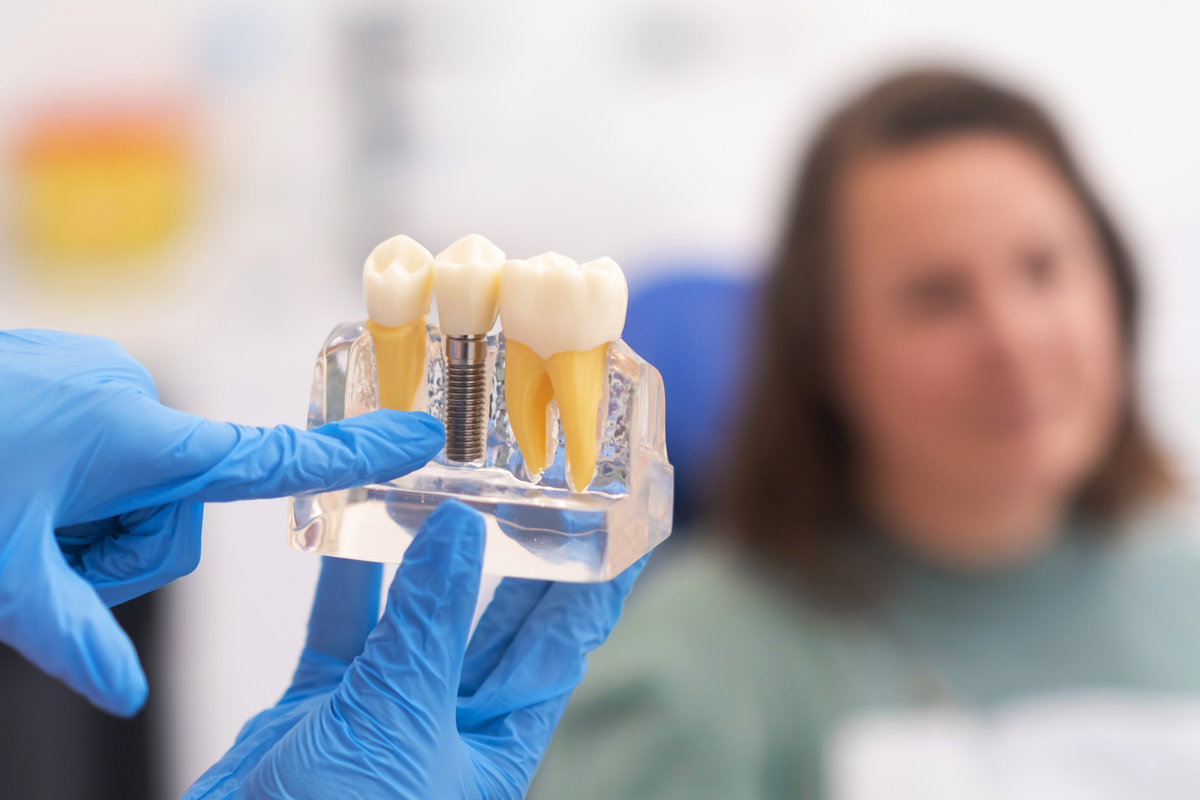
 Mini implants are the smaller alternatives to regular dental implants and offer a less invasive solution for tooth replacement. They measure less than 3 millimeters in diameter compared to standard implants, which typically range from 3.5 to 6 millimeters.
For patients with limited bone density, narrow spaces between teeth, or those seeking a faster recovery, mini implants can provide an effective alternative to conventional implant procedures.
Understanding Mini Dental Implants
Mini implants function similarly to traditional implants but with a streamlined design. Each mini implant consists of a single piece of titanium with a ball-shaped end protruding from the gum tissue. This simplified structure eliminates the need for multiple components and reduces the complexity of the placement procedure.
The installation process for mini implants requires less surgical intervention than traditional implants. We can often place them using only local anesthesia in a single appointment. The smaller diameter means we need to remove less bone tissue during placement, which contributes to faster healing times and reduced post-operative discomfort.
Who Makes a Good Candidate for Mini Implants?
Several patient profiles benefit particularly well from mini-implant treatment. Patients with insufficient bone density often find mini implants advantageous because the smaller size requires less bone volume for successful integration. This means no bone grafts are needed, saving you time and money.
Individuals seeking to stabilize dentures frequently benefit from mini implants. The smaller posts can secure dentures effectively while requiring minimal surgical intervention. For patients who have worn dentures for years and experienced bone loss, mini implants offer a viable solution without extensive preparatory procedures.
Those with medical conditions affecting healing may also qualify as candidates. Mini implant placement is a less invasive procedure that results in less trauma to surrounding tissues and a decreased risk of complications during recovery. Patients taking certain medications or managing conditions like diabetes often heal better with mini-implant procedures.
Comparing Mini Implants to Traditional Options
Traditional dental implants remain the gold standard for tooth replacement and boast success rates of 95%. They provide superior strength and longevity, particularly for replacing molars or supporting larger restorations like bridges. The two-stage placement process allows for optimal bone integration and customization.
Mini implants serve specific purposes where their smaller size provides advantages. They work well for stabilizing lower dentures, replacing small front teeth, or serving as temporary anchorage devices during orthodontic treatment. The single-stage placement means patients can leave the office with functional implants on the same day.
Cost differences between the two options reflect the complexity of treatment. Mini implants generally cost less than traditional implants due to their simpler design and faster placement process. However, the appropriate choice depends on individual circumstances rather than price alone.
The Mini Implant Procedure
We begin mini-implant treatment with a comprehensive examination using advanced imaging technology. Digital X-rays and CT scans help us assess bone quality and plan precise implant placement. This diagnostic phase ensures we select the optimal size and position for each implant.
During the placement appointment, we administer local anesthesia to ensure patient comfort. We then create small pilot holes in the jawbone using specialized drills. The mini implants screw into these prepared sites, and the ball-shaped tops remain visible above the gum line. For denture stabilization, we modify the denture to snap onto the implant heads, creating a secure yet removable restoration.
Recovery from mini implant placement typically progresses more quickly than with traditional implants. Most patients experience minimal swelling and can resume normal activities within a day or two. The implants integrate with the jawbone over the following weeks, providing stable support for restorations.
Long-Term Considerations
Mini implants require the same diligent care as natural teeth. Regular brushing, flossing, and professional cleanings maintain the health of the surrounding gum tissue and prevent complications. Patients should attend routine dental appointments so we can monitor implant stability and address any concerns promptly.
The longevity of mini implants varies based on their location and the forces they encounter. When used appropriately for their intended purposes, mini implants can function successfully for many years. However, they may not withstand the same biting forces as traditional implants in certain situations, particularly in the back of the mouth.
Experience Quality Implant Care at Elite Dental Aesthetics
Choosing the right implant option requires careful evaluation of your unique dental needs and goals. Dr. Travis Adams brings extensive training in implant dentistry and uses cutting-edge technology to deliver precise, comfortable care. We take time with each patient to explain treatment options thoroughly and develop personalized solutions.
Our commitment to quality over quantity means you get unhurried attention and comprehensive care at every visit. We perform implant procedures in our office, eliminating the need for referrals and ensuring continuity throughout your treatment. Schedule a consultation with our team to discuss whether mini implants or traditional implants best suit your situation, and discover how we can help restore your confident smile. Learn more about Dr. Adams and his approach to patient-centered dental care.